
Site Investigation and Field Testing
MATLAB Materials Laboratory carries out geotechnical site investigation in Cambodia for buildings, factories, roads, solar farms and infrastructure. Our drilling rigs perform soil boring with standard penetration tests (SPT) and rock coring with RQD logging, supported by dynamic cone penetration (DCP), dynamic probing (DPL), vane shear, plate load tests at 100 kN and 500 kN, in-situ CBR, light weight deflectometer and field density testing.
Because the laboratory is ours, every sample from the borehole is logged, tested and reported by the same accountable team, and the factual report is delivered with the laboratory results attached. Crews mobilise nationwide by pickup or drilling truck, priced by distance band up to 600 km.
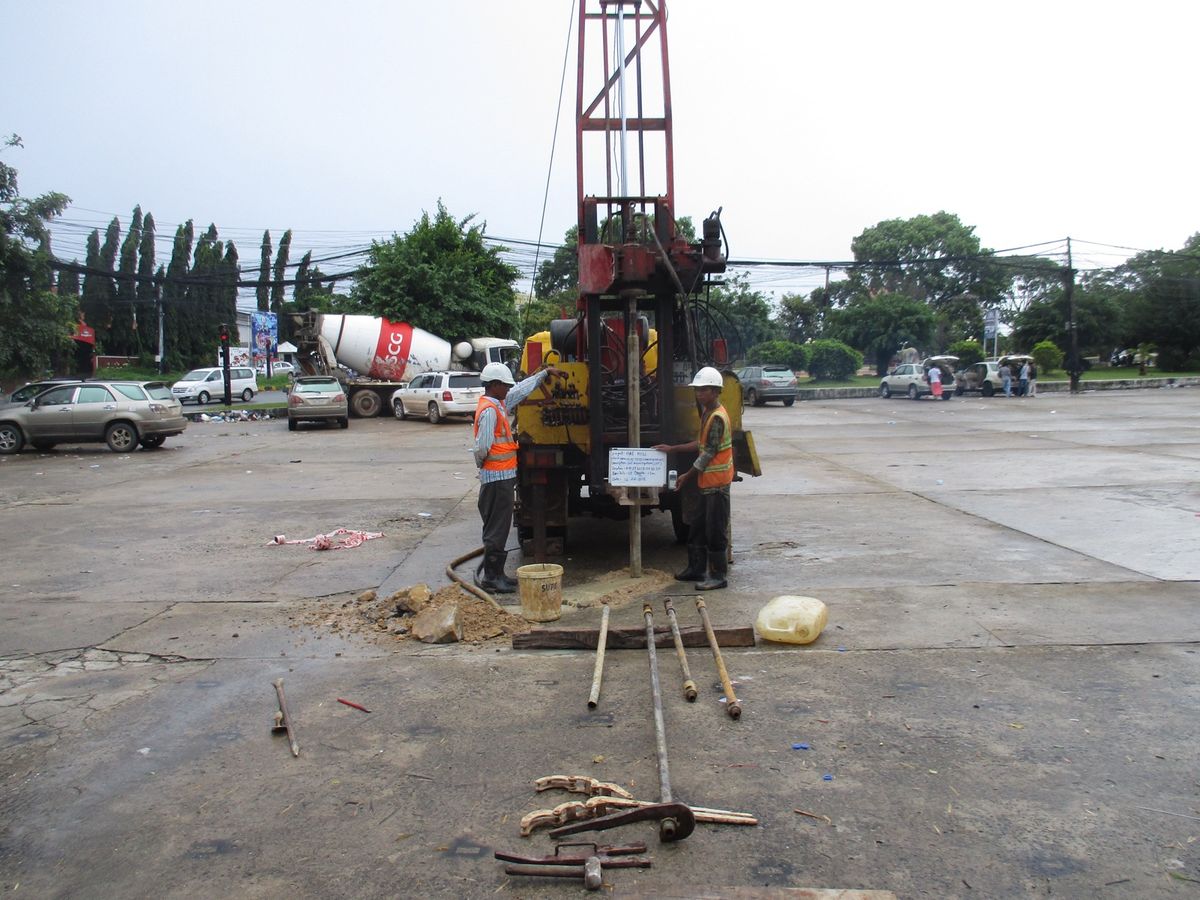
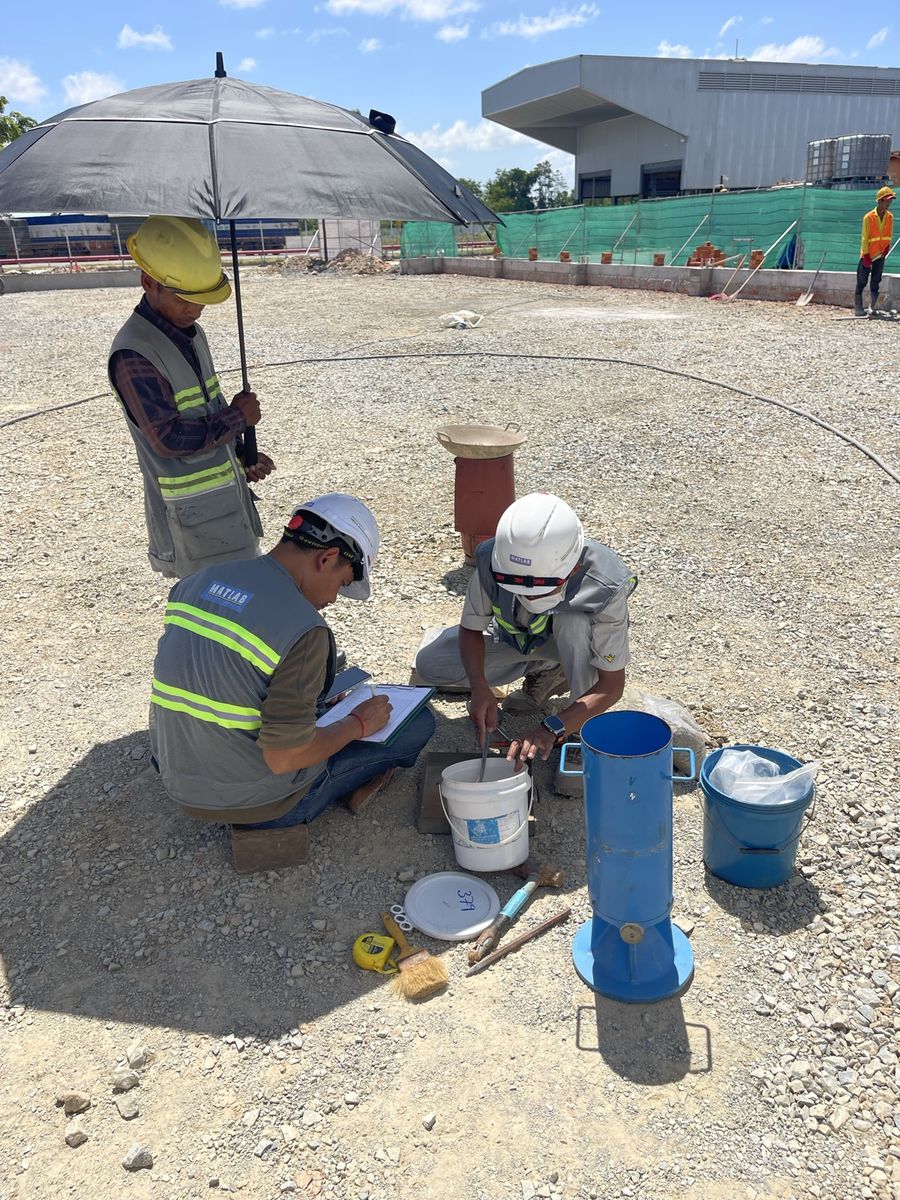
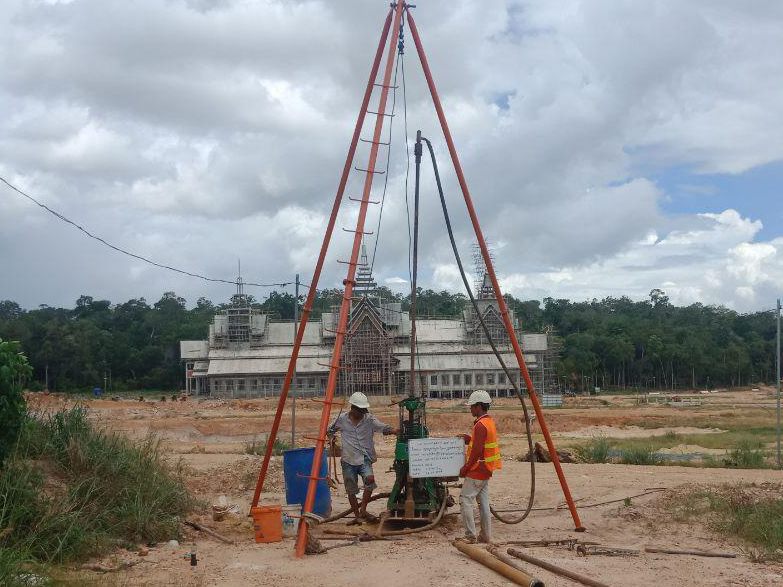
Investigation
| Test | Method |
|---|---|
| Soil drilling, sampling and SPT | ASTM D1586 |
| Rock coring with RQD and UCS | ASTM D2113 |
| Dynamic probing light (DPL, 10 kg) | ISO 22476-2 |
| Dynamic cone penetration (DCP, 8 kg) | ASTM D6951 |
| Vane shear (field) | ASTM D2573 |
In-situ testing
| Test | Method |
|---|---|
| Plate load test, 100 kN and 500 kN | DIN 18134 / ASTM D1196 |
| In-situ CBR | ASTM D4429 / BS 1377-9 |
| Light weight deflectometer (LWD) | ASTM E2835 / E2583 |
| Field density, sand cone | ASTM D1556 |
| Field density, nuclear gauge | ASTM D6938 |
Who uses this service
Developers and consultants planning foundations for buildings, factories and solar or industrial sites, road and earthworks contractors needing layer compaction approval, and mining and infrastructure projects requiring geotechnical parameters in remote provinces.
Why contractors and consultants choose MATLAB
- Part of IMECS (Cambodia) Co., Ltd., a geoscience and engineering consultancy with exploration, survey and geotechnical teams.
- Field data and laboratory testing from one team: no handover between a driller and a separate lab.
- Engineers, senior technicians and labourers available by the day or month for long programmes.
Frequently asked questions
How many boreholes does a site investigation need?
It depends on the structure, plot size and ground variability; the geotechnical engineer sets the layout. As a guide, small buildings often use two to three boreholes and larger plots a grid, each to a depth below the influence zone of the foundations. Send us the site plan and we will propose a scope.
How deep can you drill?
Soil boring with SPT to the depth required by the design, and rock coring to 100 m.
What is a plate load test used for?
The plate load test (DIN 18134 / ASTM D1196) measures bearing capacity and settlement of a soil layer under a loaded plate. It is used for shallow foundations, compacted fill, pavement layers and crane or equipment pads. We offer 100 kN and 500 kN setups.
Do you provide the geotechnical interpretive report?
We deliver the factual report with borehole logs, field and laboratory results. Interpretive reporting and foundation recommendations are available through IMECS geotechnical engineers on request.